Showing posts with label science. Show all posts

Wednesday, April 07, 2021

For the Love of Spiders and Spi-ku

I've been a fan of spiders for ages, long before I became a faculty member at the only college in the country with a spider mascot. As a classroom teacher I had a tarantula in my classroom and often shared spider-related humor with my students. A particular favorite was this Calvin and Hobbes strip. 
If you can't quite make out the text, here's what Calvin opines.
Like delicate lace,
so the threads intertwine,
Oh, gossamer web
of wondrous design!
Such beauty and grace
wild nature produces … 
UGHH, look at the spider
suck out that bug’s juices! 

While many folks focus on the "yuck factor," spiders are truly fascinating creatures. Leslie Bulion has fully captured how amazing they are in both verse and prose in Spi-ku: A Clutter of Short Verse on Eight Legs. Add in the incredible illustrations by Robert Meganck and you have a masterpiece that even arachnophobes will love.

Bulion is a master of informational texts that marry engaging, kid-friendly poetry with science. I wish her books had been around 33 years ago when I settled into my first classroom, eager to put science books in kids hands that would neither put them to sleep with their didactic approach to content, nor turn them away with the complexity of the writing. Not only were truly exceptional nonfiction science books hard to find back then, but poetry was almost nonexistent. As someone who encourages teachers to integrate poetry and children's literature into content area instruction, Leslie's books are a gift.

Let's start this review by exploring from the back. My students know how much I love back matter. It's one of the components that I believe separates good nonfiction texts from great ones. The back matter in Spi-ku consists of a glossary of 24 terms, notes on poetics forms, spider identification that includes common and scientific names (genus and species) for the 53 spiders illustrated so carefully by Meganck, ideas for going on a spider hunt, an annotated bibliography with resources for further study, the author's acknowledgements (yes, she consulted with experts!), a double-page spread showing spiders' relative sizes, and a page of close-up illustrations of the spiders that appear on the cover. Phew! See what I mean about back matter? This information adds a welcome layer of depth to the text.

While many of the poems in the text use Japanese or Japanese-inspired forms, such as haiku, tanka, dodoitsu, and cinquain, there are other forms, including limerick, double dactyl, free verse, concrete, and many more. The first poem, "Araneae All Around" provides a nice introduction to the humble spider and the volume. The poems are all accompanied by illustrations of spiders, their silks, and webs. I found myself constantly flipping between the pages and the spider identification in the back to try and determine exactly what spiders I was looking at. After the introductory poem, Bulion introduces arachnids, or the class of invertebrates that spiders belong to.

(Click to enlarge.)

I adore the word play in using mite in this poem. This is the kind of thing that students will remember. I know this one turn of phrase is a great way to remember at least one other type of organism found in the arachnid class. As pictured above, each double-page spread includes one or more verses and a block of informational text. The spiders highlighted in the text blocks appear in boldface to make them stand out. The information unfolds in a thoughtfully organized fashion, taking readers on a journey that has them learning about spider silk, spider movement, how they catch and eat their meals, their webs, how some spiders capture prey without the use of a web or snare, how spiders fool both prey and predators, spider senses, and so much more. 

I learned as much from the poems in the book as I did the nonfiction excerpts. The 3 different spreads on spider enemies all include poems for two voices and are particularly engaging when read aloud. The text ends with a final poem entitled "Appreciate Araneae!" After learning so much about them, it's hard not to appreciate all they contribute to "Our Spiderful World," which just so happens to be the heading for the last block of nonfiction text. (Go ahead, see for yourself!)

(Click to enlarge.)

There is so much to love in this volume. I encourage all you folks who are fearful or disdainful of spiders to be brave and take a peak. I guarantee that by the end of it, even the biggest spider-haters will be converts. 

For all you teachers out there, Leslie has developed a particularly useful Educator's Guide. Don't miss it!

Thanks to PeachTree for sending me a copy of the book and including me on the blog tour. You can check out the other stops this week to learn more.
You can learn more about Leslie Bulion and her books at her web site. You can also find her on social media at:
You can learn more about Robert Meganck and his art on his web site. (Turns out, he's my neighbor here in Virginia. Hi Robert!) You can also find him on social media at:
Finally, keep up with PeachTree Publishing and see what's new in their world of books at:

Friday, August 10, 2018

#pb10for10 - Encouraging the Skill of Observation

I've spent the last two weeks cleaning my office and weeding my bookshelves. That means I've put my hands on every book and have had some time to think about my offering for the Picture Book 10for10 event.

In February for the Nonfiction 10for10 event, I shared a list of books to inspire future scientists. I'm still thinking about science as I prepare for the upcoming semester and am already selecting the books I will use in those early weeks. This time around I'm focusing on the books I share to teach and encourage the skill of observation.
written by Mac Barnett and illustrated by Jon Klassen

written and illustrated by Ed Young

written by Maranke Rinck and illustrated by Martijn Van Der Linden

written and illustrated by Olivier Tallec
(Definitely check out the companions to this title: Who What Where? and Who Was That?)

written and illustrated by Britta Tekentrup
(Tekentrup has SO MANY amazing books in this same format. Don't miss The Odd One Out, One Is Not a PairWhere Did They Go?, and Where's the Baby?)

written by Bob Raczka

written and illustrated by Brendan Wenzel

written and illustrated by Henry Cole
(Also check out I Took a Walk.)

written and photographed by Walter Wick
(Wick photographed the I Spy books and eventually developed this series of his own, which contains numerous titles.)

with riddles by Jean Marzollo and photographs by Walter Wick
(As you know, there are also many books in this series.)

written and photographed by Frank Serafini
(This is part of a series that also includes books for pond, shore, rainforest, forest, and desert.)


I know this is 11 books, and I suppose I cheated a bit by mentioning other related books, but it's so hard to stop at just 10! You can read the lists others have put together at Picture Book 10 for 10.

Saturday, February 10, 2018

#nf10for10 - Inspiring Future Scientists

I've been away from blogging for a while, only checking in when I'm writing with my poetry sisters. Now that the spring semester is well underway, I'm trying to get back in the swing of things. Since it's February 10th and I love book lists, the nonfiction 10 for10 seemed a good way to start.

This academic year (17-18) I've been fortunate to go back to teaching a stand alone science methods course. This means I have 14 full weeks to spend with preservice teachers thinking about best practices in teaching elementary science. One of skills we develop is in keeping a scientist's notebook. In addition to using it for close observations, wonder questions, experimental data, nature observations, and more, we are using it to compare our work to the work found in the notebooks of naturalists and scientists. In doing this, I've been sharing a number of books about scientists. Here are just a few of my favorites. I hope you consider sharing these with your future scientists.

written by Robert Burleigh and illustrated by‎ Raúl Colón

written by Matthew Clark Smith and illustrated by Giuliano Ferri 

written by Suzanne Slade and illustrated by Jessica Lanan 

written by Jim Ottaviani and illustrated by‎ Maris Wicks 

written by Julia Finley Mosca and illustrated by‎ Daniel Rieley 

written by Jess Keating and illustrated by Marta Alvarez Miguens 

written and illustrated by Stephanie Roth Sisson  

written by Jeannine Atkins  

written and illustrated by Rachel Ignotofsky  

written by H. Joseph Hopkins and illustrated by‎ Jill McElmurry  

This is just the tip of the iceberg, but I'm sticking to 10, though I do want to cheat and throw in a few more. I guess that just means I'll need to revisit this topic.

You can read more about nf10for10 at It's Coming: February's Nonfiction Picture Book Event.

Friday, September 09, 2016

The Straight Poop on Who Pooped in Central Park?

Way back in 2009 I wrote a post entitled Low-Brow Topics That Make For High-Brow Reading. Here's how it began.

*****
On Tuesday I finally threw up my hands in frustration over the proliferation of "boys don't read" articles in the last few months. Here's an excerpt from the post entitled More Boy Bashing - Here We Go Again.
Can we please give boys and young men just a bit of credit for their reading habits? If we constantly push potty and other forms of low humor on them as something they'll read, aren't we just setting the bar a tad bit low?
I was thinking about this last night as my son and I were reading a portion of Jurassic Poop: What Dinosaurs (And Others) Left Behind, written by Jacob Berkowitz and illustrated by Steve Mack. Yes, this is a book ostensibly about poop (see that word in the title?), but it is SO MUCH MORE. The book discusses fossils, fossilization, carbon dating, history, archaeology, and the work of several different scientists. My son was drawn in more by the dinosaur connection than anything else, but since reading it he has been endlessly fascinated with the notion that you can learn about the past from things (artifacts) that are left behind, poop being one of them.

There are a number of books on low-brow topics that we hand to reluctant readers in an attempt to encourage them to read. However, the base nature of these topics and the quality of the work don't need to be mutually exclusive. (Oh, a book about poop? Must be crap!) So, in an effort to elevate some topics and/or titles perceived to be low-brow, here are some books (nonfiction all!) that will interest boys AND girls by the very nature of their FABULOUSLY INTERESTING content.

*****
That list was filled with books on poop, toilets, underwear, and more. Why mention this in a book review? Because I've found a book (heck, a whole series!) that could easily be added to this list.

Gary D. Robson has written 20 books in the Who Pooped in the Park? series. Just take a look at this map to see some of the locations covered. I had no idea there was a book for Virginia! I'll be picking that one up for my outdoor education workshops soon.
You can learn more about the series at Gary's web site.

The latest book in the series is WHO POOPED IN CENTRAL PARK? SCAT AND TRACKS FOR KIDS. Emma, Jackson, Lily and Tony spend a day walking through Central Park, beginning at the Central Park Zoo and ending at Farmer's Gate. At the beginning of their walk they meet a worker named Lawton who tells them he can identify animals by their scat and tracks. As the kids move through the park, they stop along the way to make observations, talk to people they meet, and look at poop and tracks. It's certainly an interesting way to spend the day, and the kids are fully engaged with their explorations. Back matter includes additional information (scat and tracks) on ten of the animals observed directly or indirectly through the signs they leave behind.

While I like the story and, I was even more enamored of the informational boxes on most double-page spreads titled "The Straight Poop." These boxes, added to the text, provide readers with a wealth of information. Here's an example of what you'll find in these boxes.
Groundhogs (also called woodchucks) build long, underground tunnels with special rooms just for pooping, so you won't find much groundhog poop above the ground.
Even though this book is set in Central Park, folks in the northeast, particularly in urban areas or close to state and local parks, will find this a useful guide. Even kids who don't live in and around NYC will learn something about the myriad of animals depicted. And really, who can resist a book about poop? Certainly not me.

Friday, February 19, 2016

Nonfiction 10 for 10 - Recommendations from a Teenage Boy

How could I possibly pick the 10 nonfiction books I can't live without? Frankly, it's an impossible task for me. I use children's literature in every class I teach. I loan them to students, take them on school visits, and read them to my kid (who is now 15).

I also create a LOT of thematic book lists for teachers, so as I look at my shelves I find them lined with favorites. Since I couldn't settle on a topic or find it in my heart to stop at 10, I asked my son to pick some of his favorite books to share. Here are the books he remembers fondly and thinks other nonfiction loving boys will enjoy. I'll add that I believe boys and girls, avid and reluctant readers—ALL kids will find these interesting reads. So without further ado, William's list. Whatever you do, don't let the first title scare you away, as this is a pretty amazing list of titles.

*****
Jurassic Poop: What Dinosaurs (And Others) Left Behind, written by Jacob Berkowitz and illustrated by Steve Mack is a book about ancient poop. This is a boy's dream--dinosaurs and poop in one book! I'm not a fan of potty books or humor, but must admit that this book is a real gem. Chapter 1, A Message From A Bottom, begins with illustrations of a T-Rex leaving a turd "larger than two loaves of bread" and shows how that "king-sized poop" becomes a coprolite. Coprolite is the "polite word for fossil feces." Readers learn that coprolites can be frozen, dried or lithified. They also learn about doo-doo detectives (scientists who study coprolites) and much more. There is humor in this book, a huge number of synonyms for poop, and a TON of science.


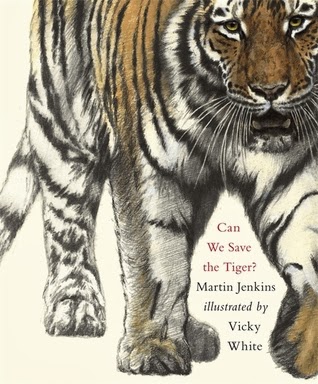
Can We Save the Tiger?, written by Martin Jenkins and illustrated by Vicky White, is an oversize volume with gorgeously detailed pencil sketches and a text that neither talks down to readers nor glosses over the difficult problems we humans have created. While Jenkins begins by discussing animals that are now extinct and why that is so, he goes on to discuss endangered species and once-threatened animals whose numbers are now on the rise. Discussing endangered species is a complex issue, impacting not only the animals themselves, but the humans that live in close proximity to them. Saving animals, while noble, is not always a black and white issue. Jenkins tackles this head on in a conversational and understandable way. 

Animals profiled include dodo, stellar sea cow, marsupial wolf, great auk, broad-faced potoroo, tiger, Asian elephant, sloth bear, African hunting dog, partula snail, quokka, mariana fruit dove, ground iguana, white-rumped vulture, sawfish, European crayfish, golden arrow poison frog, American bison, white rhinocerous, Antarctic fur seal, vicuna, kakapo, Rodrigues flying fox, whooping crane, Bermuda petrel, and polar bear. On the final page readers will find an illustration of Sander's slipper orchid, a plant that is protected because it is endangered. Back matter includes suggestions for further Web research and an index. 


Vulture View, written by April Pulley Sayre and illustrated by Steve Jenkins - Scavengers and decomposers play a very important role in maintaining the balance of the ecosystem. In helping to break down dead organisms, they are responsible for returning basic nutrients to the soil so that they may reenter the chain. In this book, we get a glimpse of the scavenging role that vultures play. I know that right now some of you are saying, "Gross! Why would I want to learn about these disgusting birds?" Here's my response. First, vultures are incredibly clean birds, bathing and preening regularly. Second, and more importantly, vultures are a vital part of our natural environment, cleaning up dead carcasses and decreasing the spread of some diseases. Third, they're just plain interesting.

In rhythmic, precise text, Sayre teaches us much about the amazing turkey vulture. Here's an excerpt on how they find their food. Readers learn that vultures soar on thermals, taking to the air as it warms, returning to roost in the trees as air cools. The book ends with a section entitled Get To Know Vultures, with the Subsections: (1) Soaring Up, Up, Up!; (2) The Vulture Family; (3) Nature's Cleanup Crew; (4) Family Life and Range; and (5) Heads Up, Young Scientists. It is packed with information and even includes a link to the Turkey Vulture Society's web site, as well as information on festivals that celebrate vultures/buzzards.

Down, Down, Down: A Journey to the Bottom of the Sea, written and illustrated by Steve Jenkins, treats readers to the wonder of the world's oceans. Jenkins' tour of the oceans begins at the surface and ends in the Marianas Trench. Each double page spread contains a paragraph (or two) of information about that particular depth, illustration of the inhabitants, and a depth meter. The depth meter appears on the right edge of each spread and extends from the top of the page (the surface) to the bottom (deepest spot in the ocean). The depth is marked with what looks like a red push-pin and is labeled with the distance below sea level (in both feet and meters) and the temperature (in both Fahrenheit and Celsius).

How much do we really know about the earth's oceans and the creatures that live there? The answer is, not much. In clear, concise text, Jenkins takes us on an unbelievable, fact-filled journey. The illustrations of the creatures, from the beautiful and familiar to strange and exotic (weird!), are gloriously rendered. (See images herehere and at this terrific review at Seven Imp.) At the end of the book are five full pages of background information on the animals in the book. Each section includes a diagram that shows the size of each creature compare to an adult human's body or hand. The final page includes a brief bibliography and another depth meter that shows how deep humans and sea vessels can descend.


Volcano Rising, written by Elizabeth Rusch and illustrated by Susan Swan, looks at volcanoes as constructive forces of nature, building up the surface of the Earth. Beautifully illustrated in mixed media with lots of examples and labels, this book uses two levels of text to engage readers. The first level of text provides readers with basic volcano information. This is accompanied by detailed informational text that provides more comprehensive information on volcanoes. Both levels of text are well-written and make the concepts accessible for readers across a range of ages. Together the text and illustrations offer a dramatic introduction to volcanic activity.

Rusch introduces readers to 8 different volcanoes around the world and explores their impact when found in what some might consider unusual places, like under a glacier or on the seafloor. Back matter includes a glossary of 30 volcano vocabulary words and an extensive bibliography.


Bubble Homes and Fish Farts, written by Fiona Bayrock and illustrated by Carolyn Conahan, is an all-out fun-fest of animal bubbleology. Ho do animals use bubbles? After reading this title, a better question is how don't they?! Before reading this try to guess what animals and/or bubble strategies might be highlighted. Whales and bubble netting? Check. Tree frog nests? Check. And ... that's where the knowledge of most readers ends. Who knew there were so many ways to use bubbles? All total, Bayrock has introduced readers 16 different animals that sail through the water, run on its surface, and even taste disgusting, all thanks to bubbles.

Accompanied by a soft palette of gorgeous watercolor illustrations, Bayrock takes readers on a journey into worlds not often explored. Each double-page spread begins with a short sentence that describes the way in which bubbles are used. Beneath that are the common and scientific names for an animal, followed by a paragraph that describes how that particular creature uses bubbles in its daily life. The illustrations are whimsical, with each animal spouting its thoughts in, you guessed it, a bubble.

The back matter in the book contains end notes about each animal, including its habitat, where in the world it lives, and even more amazing facts. There is also a glossary of terms and an index, as well as a lengthy list of acknowledgments, a huge number of them scientists and scholars who aided the author in her research. This is a well-researched, thoroughly engaging book for studying animals and the way they adapt to their environment. 


What's for Dinner?: Quirky, Squirmy Poems from the Animal World, written by Katherine B. Hauth and illustrated by David Clark, is a collection of poems about food chain topics. The introductory poem, "What's for Dinner," explains why animals must find food. What follows this introductory piece are humorous, graphic, scientific, inventive and just downright fun poems. Accompanied by equally graphic and humorous illustrations, the perfect pairing of word and art gives us a book that readers will love. In the poem entitled "Waste Management," a rather haughty-looking vulture pulls at a strand of the innards of a carcass while standing on the exposed ribs. While most of the poems are about animals, the last entry, "Eating Words," uses poetry and word roots to define insectivore, carnivore, herbivore, and omnivore.

The back matter includes a section entitled More Words About the Poems, which explains a bit more of the science and further explains vocabulary terms such as symbiosis, parasitism, mutualism, commensalism, and more. More Words About  the Animals provides background information for each of the poems. The final page of the book provides some additional titles for learning more about the animals in the book.


Hottest, Coldest, Highest, Deepest, written and illustrated by Steve Jenkins, is a book that examines extremes in the natural world, such as the highest mountain (based on elevation), longest river, location with the most extreme tides, the driest spot on earth, and more. Jenkins grabs the attention of readers from the first page and makes them want to know about all these places. On every double-page spread that follows is a statement of fact, an inset map showing location, a bit of informational text, and some other graphic to help readers visualize and better understand the information. There is no back matter in this volume, but the final page does include a world map that pinpoints the 12 locations described. 


Born to Be Giants: How Baby Dinosaurs Grew to Rule the World, written and illustrated by Lita Judge, not only answers this question, but explores how dinosaurs hatched from eggs grew and survived to become some of the largest creatures that ever walked the earth. Judge uses evidence discovered by paleontologists and to hypothesize how dinosaurs may have behaved. Judge doesn't shy away from difficult vocabulary in the text, using words like altricial and precocial. However, readers are supported in understanding these words through simple, explanatory sentences, as well as the inclusion of a glossary. Eight species of dinosaur are explored in the book. Early on readers are introduced to Argentinosaurus, a dinosaur that likely weighed as much as 17 elephants. Imagine for a moment just how large this dinosaur must have been. Now juxtapose this with the knowledge that the largest dinosaur eggs ever found were only 18 inches long. As Judge tells readers, "These mothers probably couldn't protect their tiny babies without trampling them underfoot." Dinosaurs may have been giants, but surviving to adulthood was no easy task. The text leaves readers much to ponder while also providing a wealth of factual information. There are some brief notes in the back matter about each of the dinosaur species, including pronunciation (always important with dinosaur names), approximate size, location of fossils, and period of appearance.


Nic Bishop Frogs, written and photographed by Nic Bishop, provides readers with a thorough introduction to members of the order Anura. Found on every continent, frogs and toads (which are just a type of frog) come in every imaginable size and color. Bishop does an outstanding job presenting this variety in the photographs and text. The text in this book is inherently understandable. Each page has a main idea written in large font, a paragraph of information, and a short section in small font with an additional fact or two. Every page is filled with scientific information, amazing and sometimes quirky facts, and gorgeous photos. One the page accompanying a photo of a glass frog (one in which you can see through its skin to its internal organs), readers learn that frogs have 159 bones, nearly 50 less than the number found in the human body. Bishop explains that frogs do not have rib bones, and that this explains why frogs are so good at squeezing through "small gaps, like between your fingers when you are trying to hold them."

It is clear that Bishop has his readers carefully in mind. Scientifically, he doesn't talk down to them, but rather helps to make the mystery that is life and science more understandable. The conversational tone hooks readers and keeps them interested. What kid hasn't wanted to hold a frog in his/her hand, only to have it wriggle away? The text as a whole is thoughtfully laid out and proceeds in an orderly and reasonable fashion through a variety of topics, from where frogs live, to what they look like, how their bodies are constructed and adapted, their eating habits, means of escaping predators (camouflage and those incredible legs and jumping skills), the sounds they make, reproduction, and much more.

In the back matter, Bishop devotes two pages to describing his love for his work, the process of photographing frogs, and the interesting experiences he had along the way. Kids will love learning about how he captured the images on film almost as much they will love learning about the frogs.

*****
So, there you have it. These works of nonfiction are sure to spark curiosity and delight many young readers. And by the way, the teenage boy had difficulty stopping at 10 too! Settling on one Nic Bishop book was struggle, as was deciding which Jenkins' books to leave off the list, or which dinosaur book to choose. All in all, he did a fine job. I hope you love these as much as he does. I know I do.

Monday, August 10, 2015

#pb10for10 - Books to Begin My Semester

I've been working these last few weeks on preparing my syllabi for fall classes. Here are the books I'll be sharing the first week of the semester with my preservice teachers in my math and science classes.

Science
During the first week we explore the nature of science and the work of scientists.
What is Science?, written by Rebecca Kai Dotlich and illustrated by Sachiko Yoshikawa

What is a Scientist?, written by Barbara Lehn with photographs by Carol Krauss

Boy, Were We Wrong About Dinosaurs!, written by Kathleen Kudlinski and illustrated by S.D. Schindler

11 Experiments That Failed, written by Jenny Offill and illustrated by Nancy Carpenter

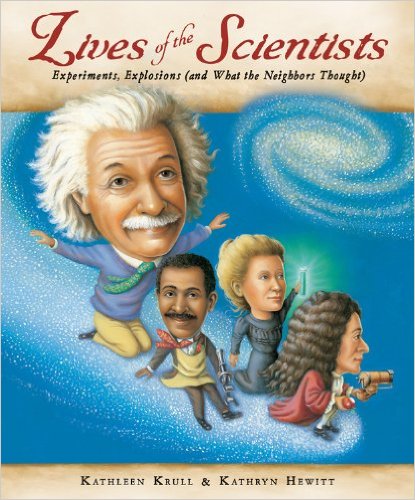
Lives of the Scientists: Experiments, Explosions (and What the Neighbors Thought), written by Kathleen Krull and illustrated by Kathryn Hewitt 


Math
During the first week we discuss how math is used in our daily lives and we jump right in and solve problems. 
Math Curse, written by Jon Scieszka and illustrated by Lane Smith

Missing Math: A Number Mystery, written and illustrated by Loreen Leedy

  
Marvelous Math: A Book of Poems, selected by Lee Bennett Hopkins and illustrated by Karen Barbour

 
Edgar Allan Poe's Pie: Math Puzzlers in Classic Poems, written by J. Patrick Lewis and illustrated by Michael Slack

The Grapes of Math, written by Greg Tan and illustrated by Harry Briggs

You can check out the other folks participating at the Picture Book 10 for 10 community.